What can you learn from a finished dress image?
Start with the whole silhouette before zooming into decoration. Identify where the garment is broad or narrow, where the main colour changes, and where the eye lands first. Then inspect how a repeated colour or edge links the upper and lower sections. These are visible relationships that do not require knowing the hidden inventory.
The official July Tea publishes seven player creations, credited to blueisasome, Ser Wobbles the Wobbly, DannyMothHere, MothIn30Seconds, CoffeeClearwingMoth, nanda, and the collaborators Wilt and Eli. They are pre-release examples of player work, not Build 443 demonstration dresses or verified commission recipes. The images on this page preserve that source context.
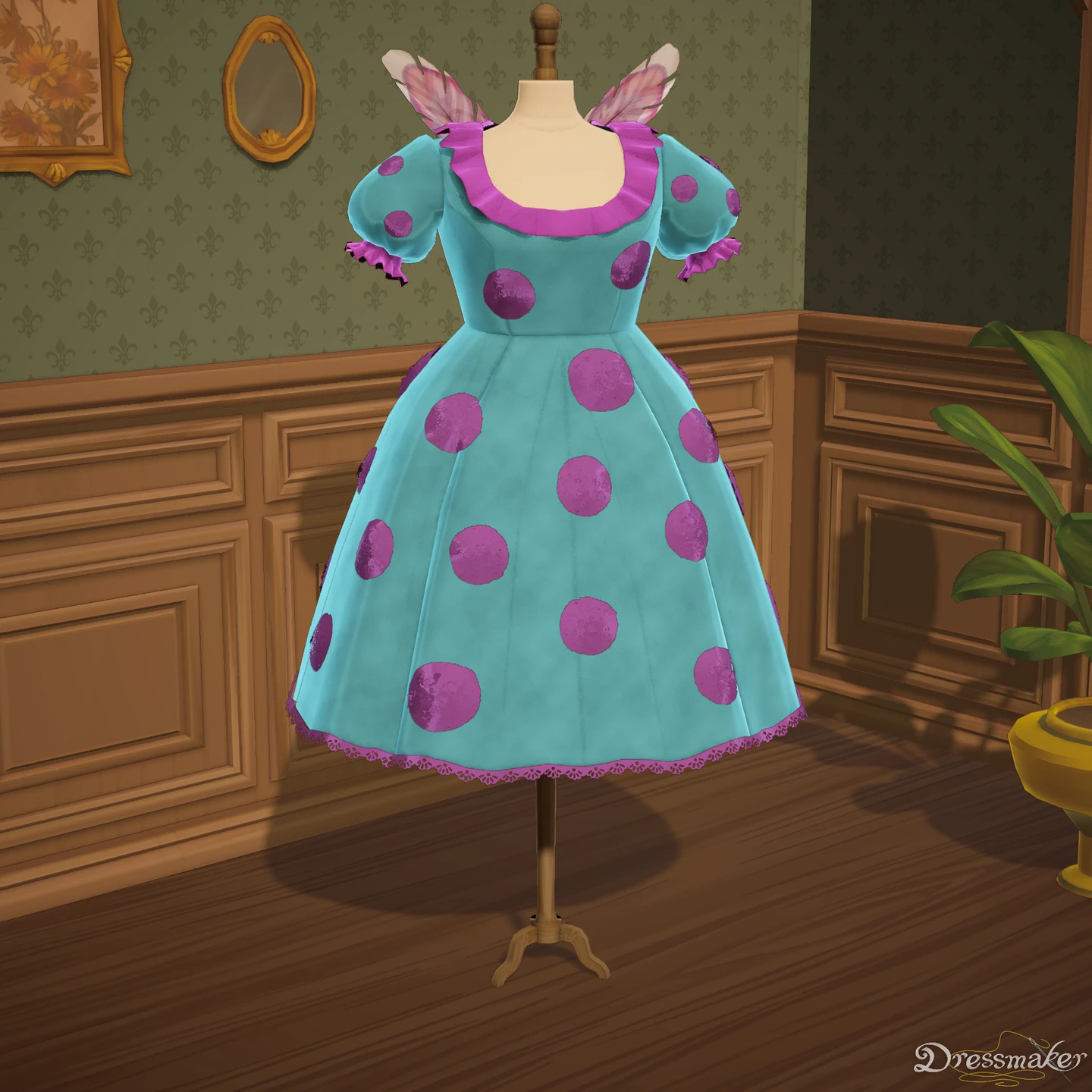
Large purple circles and pink shoulder details organise a turquoise garment.
- Look first at the size of the repeated circles, then at their distribution across the skirt.
- Compare the upper accent with the larger lower area; keep the item names unassigned.
Pre-release media published July 28, 2026. This image does not establish the Build 443 interface or item unlocks.
July showcase creators: blueisasome, Ser Wobbles the Wobbly, DannyMothHere, MothIn30Seconds, CoffeeClearwingMoth, nanda, Wilt and Eli; published by Cozy Lives / Free Lives
Read the original publication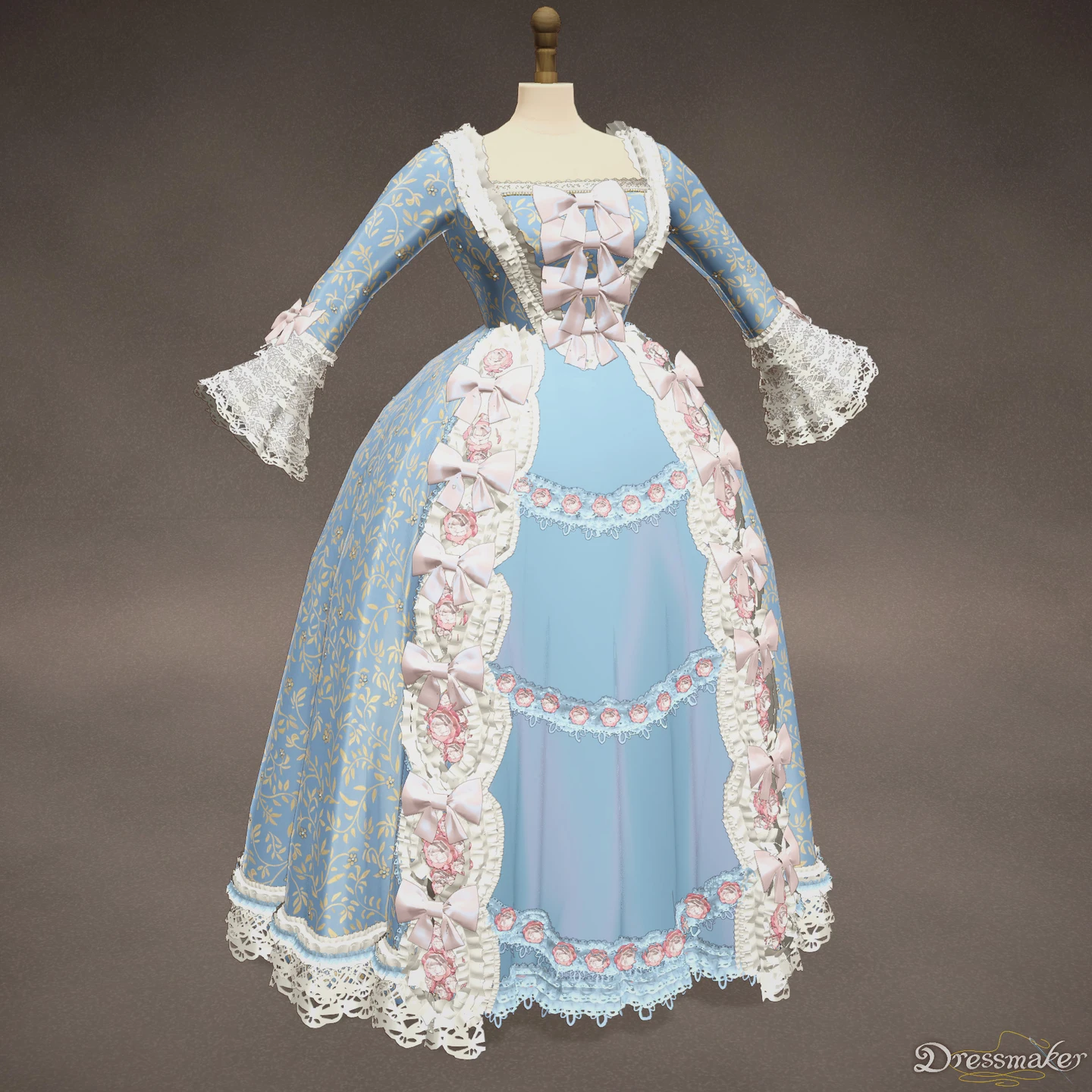
A pale blue and white gown uses visible borders to separate long garment areas.
- Follow a pale border across the upper section and then toward the long skirt.
- Compare the boundary at full view before zooming in on a decorative detail.
Pre-release media published July 28, 2026. This image does not establish the Build 443 interface or item unlocks.
July showcase creators: blueisasome, Ser Wobbles the Wobbly, DannyMothHere, MothIn30Seconds, CoffeeClearwingMoth, nanda, Wilt and Eli; published by Cozy Lives / Free Lives
Read the original publicationHow do contrasting colour areas guide the eye?
In the turquoise example, large purple circles sit across the skirt while pink shoulder details mark a separate upper area. Read the size and position of the colour areas before trying to identify a fabric name. The repeated circles create a very different rhythm from a small all-over floral print.
For a project of your own, choose one relationship to study. You might compare a large repeated motif with a quieter upper section, while keeping the component layout steady. The useful question is whether the intended focal area remains readable from a full view. It is not whether the same screenshot can be reconstructed from guessed item IDs.
How can a pale dress keep its detail readable?
The pale blue and white example uses differences between the upper section, the long skirt and the trim-like edges to divide the garment. A limited colour range directs attention toward shape, boundaries and surface detail. Look for the transitions instead of assuming that a pale material is a particular lace or silk.
An editorial exercise is to inspect one project first from a distance, then close to a boundary. If the intended separation disappears at full size, compare the colour blocks or an existing edge detail. Do not add decoration everywhere at once. You would lose the ability to see which change made the structure clearer.
What does repeated edging contribute?
| Visible relationship | What to inspect | Possible exercise in your own project |
|---|---|---|
| Colour repeated at top and bottom | Whether it links separated areas | Repeat one existing accent in a second location |
| Edge detail around several sections | Whether it helps reveal the component boundaries | Compare a plain edge and one restrained border |
| Large motif beside a plain area | Whether the motif stays legible | Keep one focal panel and quieten a neighbouring area |
| Different widths along the silhouette | Where the outline changes most | Inspect front and side before adding accessories |
The exercise column describes a comparison, not a required item purchase. Keep the brief beside you if you are working on a commission; an appealing visual change can still affect a capped target or material condition. The commission ledger keeps those constraints visible.
How do you turn an observation into a manageable project?
Write one sentence naming the feature you want to explore. Choose a familiar component layout and one candidate material. Inspect the fabric preview for light response and the print layout for motif placement. After assembly, compare front, side and back before selecting a new focal decoration.
For a free design, keep its sale outcome separate from a customer hand-in. The off-rack guide explains that distinction. For a photograph, keep an uncropped reference with the scene and date as well as any presentation crop. This makes it easier to compare the same creation later.
What should stay out of a visual study?
Do not assign exact fabric names, prices, unlock stages or scores from appearance alone. A player may have used a combination that the image does not reveal. Keep the observation specific enough to check: “a pale edge separates two areas” is stronger evidence than an invented recipe.
When sharing someone else’s dress, retain the creator credit and link the source rather than presenting it as your own work. The verified media collection provides more examples with their publication dates; its older captures have not been relabelled as the latest patch.
Three examples, one design question at a time
These examples come from the April and May official player showcases. Choose a single relationship to study before changing your own sketch; changing colour, components and decoration together makes the result harder to compare.
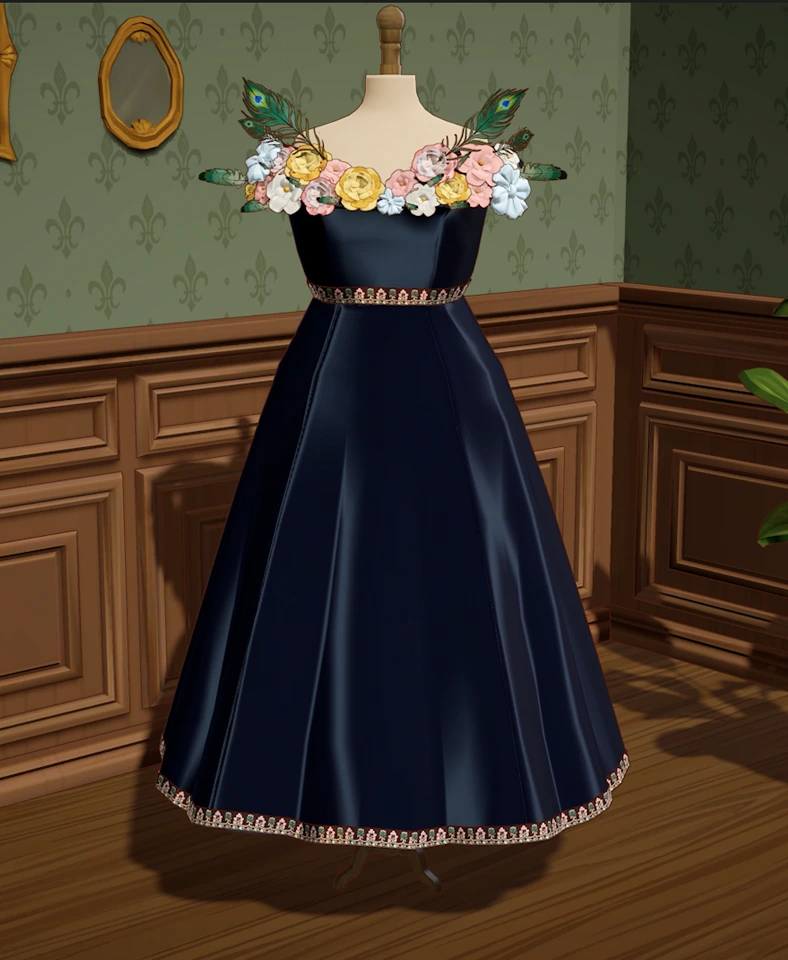
Pale flowers gather at the neckline above a quieter dark skirt.
- Zoom out and check whether the neckline still draws the eye first.
- For your own comparison, change decoration placement while keeping the silhouette.
Pre-release media published May 27, 2026. This image does not establish the Build 443 interface or item unlocks.
Player showcase published by Cozy Lives / Free Lives; announcement credits collectively: Eli, andando, IrinaElina, RoseNoire, OuchPotatoes, RandomXiwi, Mortis. Individual image attribution unspecified.
Read the original publicationFocal point: concentrate the detail
The dark blue example places pale flowers around the neckline. The broad dark skirt gives those details room. Mark the neckline, waist and skirt on a sketch and identify the busiest area. Pick a main area for your own project before filling more edges.
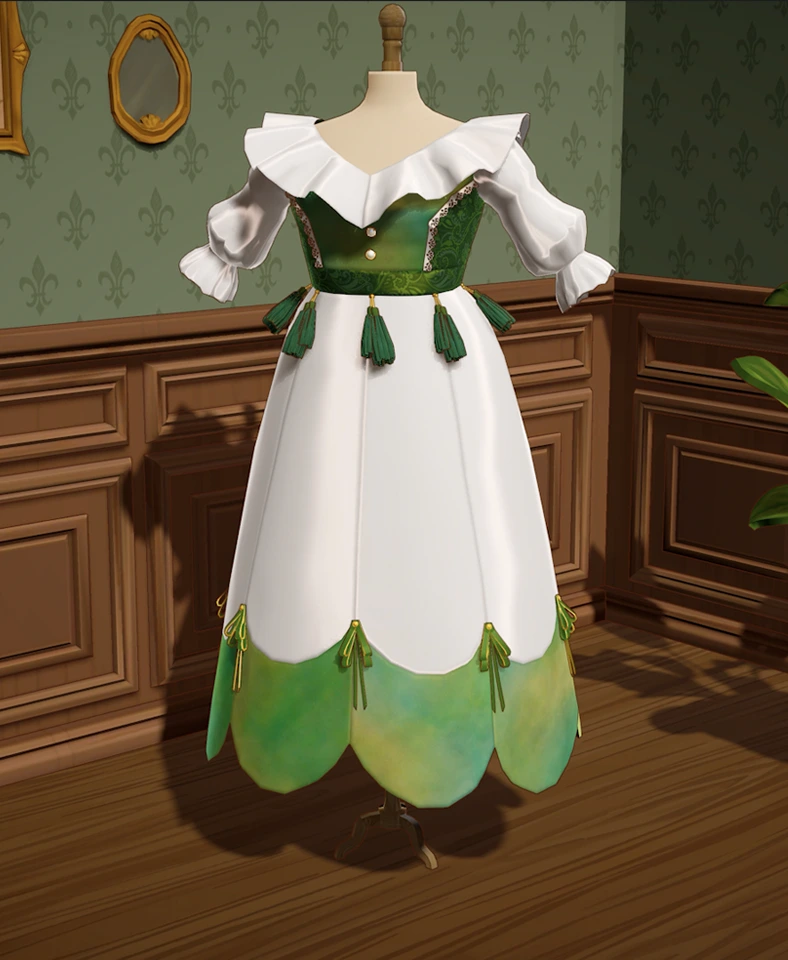
A white petal-like lower edge and green areas extend the theme into the silhouette.
- Follow the outside edge before comparing the waist and hem.
- Petal-like describes the appearance; the image does not identify a component name.
Pre-release media published May 27, 2026. This image does not establish the Build 443 interface or item unlocks.
Player showcase published by Cozy Lives / Free Lives; announcement credits collectively: Eli, andando, IrinaElina, RoseNoire, OuchPotatoes, RandomXiwi, Mortis. Individual image attribution unspecified.
Read the original publicationSilhouette: read the outside edge
The white petal-like edge remains visible from farther away than a small ornament. A theme can appear in the outline as well as the print. Decide on length and width in your own sketch before adding another motif.
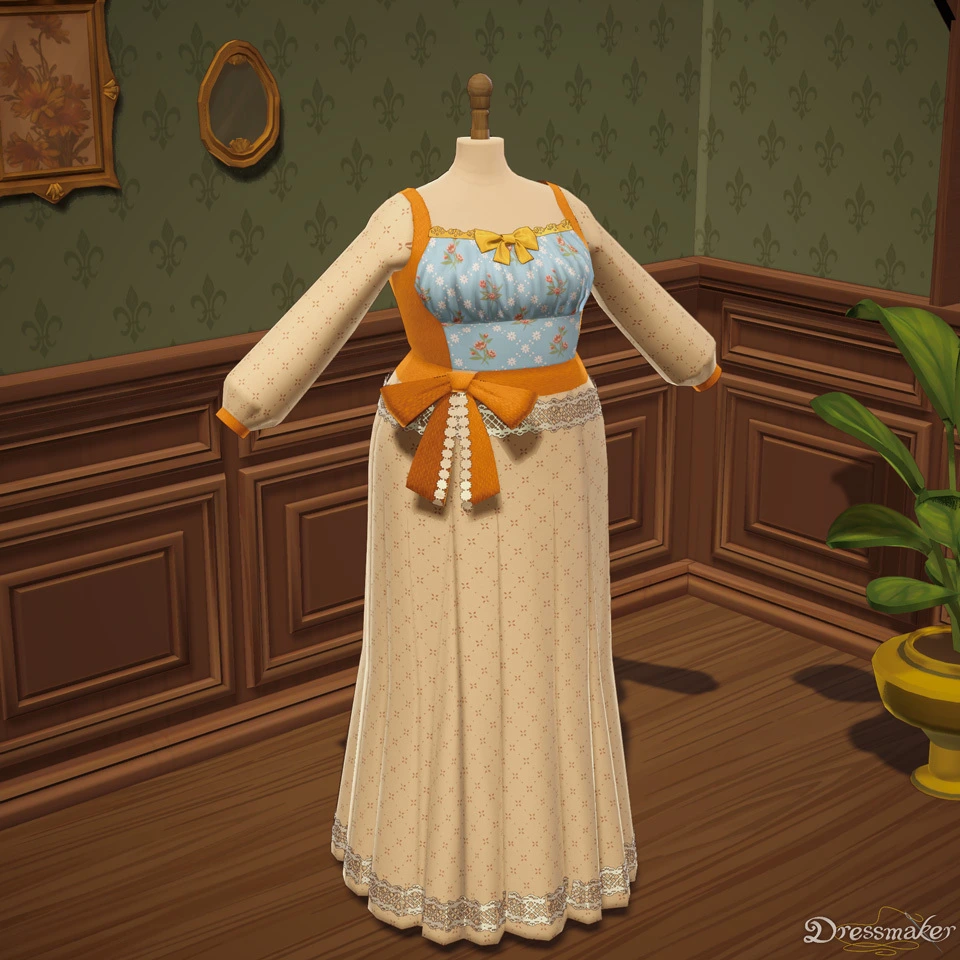
An orange waist bow stands out between a pale blue bodice and cream skirt.
- Compare the waist and neckline contrast in a full-body view.
- The visible bow does not identify a particular catalogue item.
Pre-release media published April 15, 2026. This image does not establish the Build 443 interface or item unlocks.
Player showcase published by Cozy Lives / Free Lives; announcement credits collectively: 7nsomniac, OuchPotatoes, jupeium, taylor, IrinaElina, RoseNoire. Individual image attribution unspecified.
Read the original publicationAccent colour: compare at full-body scale
The orange waist detail is easy to distinguish between the lighter upper and lower areas. Keep your main colours fixed, change one accent position and take comparison pictures from the same angle. See photo records and fabric previews for the next checks.
These historical showcases were published on 15 April and 27 May 2026. Full captures retain their proportions. The announcements credit creators collectively; we retain the groups rather than assigning an unverified individual to an image. Illustrated analysis added 23 October 2026.
Source and date
Checked 21 October 2026 against Dressmaker July Tea. The images are genuine player work published by the developer. Visual readings and practice exercises are editorial, with no claim of firsthand testing or exact reconstruction.